
 [[{“value”:”
Meet the newest member of our family of all-in-one PCs: Raspberry Pi 500+. It’s a complete desktop computer, a love letter to the machines of our childhoods, and our most polished product yet.
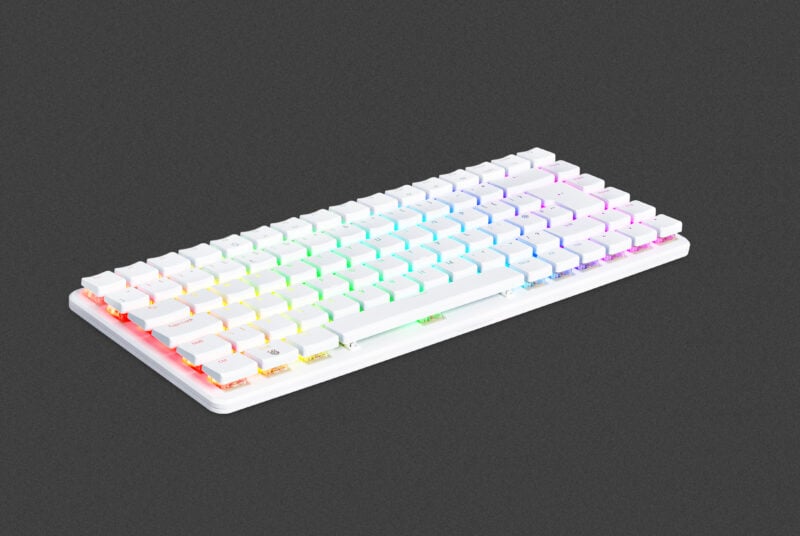
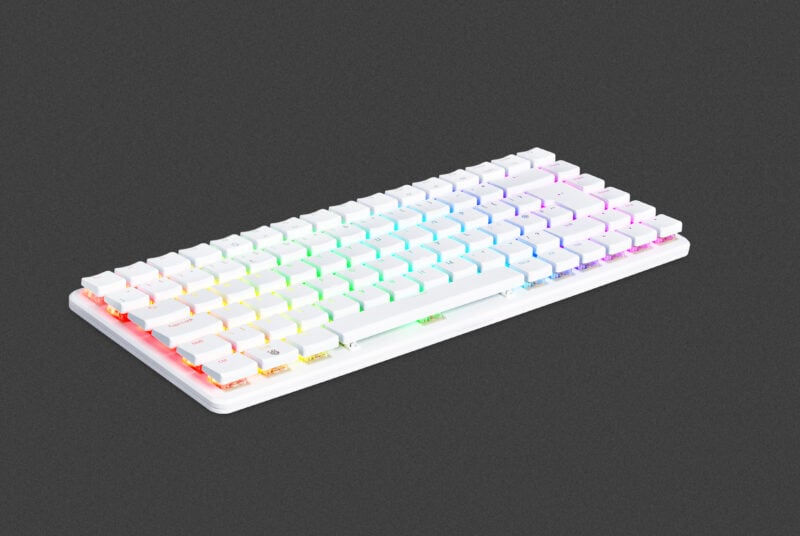
Raspberry Pi 500+ boasts a high-quality mechanical keyboard with removable keycaps and individually addressable RGB LEDs, an internal M.2 socket pre-fitted with a 256GB Raspberry Pi SSD, and 16GB of RAM. Read on for the full story, or skip straight to the Raspberry Pi 500+ product page to order yours.
Raspberry Pi 500+ is built on the Raspberry Pi 5 platform, featuring a 2.4GHz quad-core Arm Cortex-A76 CPU, dual 4k display output, dual-band Wi-Fi and much more, and is priced at $200. It is also available in a $220 Desktop Kit, which adds:
- A Raspberry Pi Mouse
- A Raspberry Pi 27W USB-C Power Supply
- A 2m micro HDMI to HDMI cable
- A copy of the Raspberry Pi Beginner’s Guide, 5th Edition
This is just a tribute, you’ve got to believe me
Many of us, like many of you, are children of the 1980s home computer revolution. When we’re designing new Raspberry Pi products, we naturally look back to the computers of our childhoods: the tastefully beige BBC Micro, the Sinclair Spectrum with its rubber keyboard, the Commodore 64 “breadbin”, or the grandfather of them all, the Apple II. The original Raspberry Pi was a worthy successor to these devices despite lacking a case and a keyboard, but we always had an ambition to build something more complete — more finished — for our education and hobbyist customers.
In the autumn of 2020, we launched Raspberry Pi 400, our first all-in-one PC: the same chipset as Raspberry Pi 4, with 4GB of RAM, packaged inside a compact membrane keyboard. Raspberry Pi 400 was hugely popular with hobbyists, and thousands were distributed by the Raspberry Pi Foundation under its Pi Drop programme, to be used by children studying from home during the pandemic.
When we launched Raspberry Pi 400’s successor, Raspberry Pi 500, last year, eagle-eyed observers noticed some unpopulated sections of the PCB (notably the M.2 socket and supporting circuitry) and wondered if another product was in the works. That product is Raspberry Pi 500+, which turns every aspect of the all-in-one PC concept up to eleven.
Switches are key
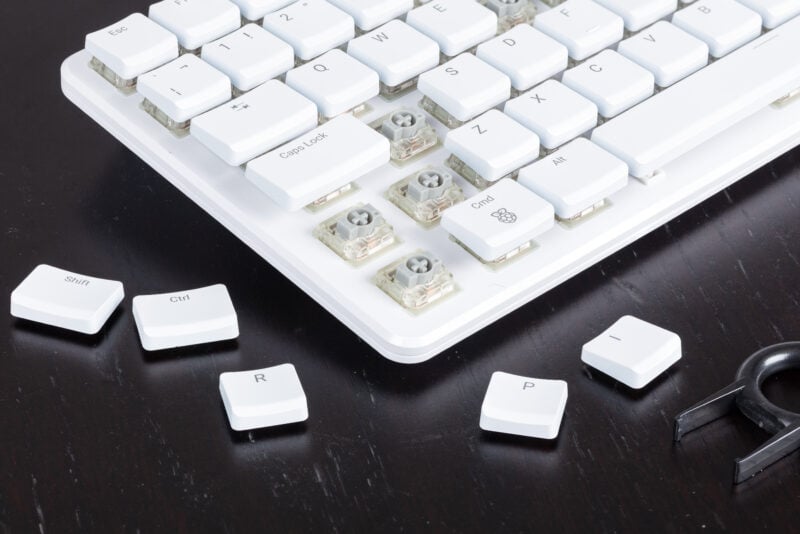
The most obvious physical difference between Raspberry Pi 500+ and 500 is the keyboard. Each key rests on a Gateron KS-33 Blue switch with a custom RAL 7001 Silver Grey stem, giving a satisfying sound and feel when pressed. Individually addressable RGB LEDs provide programmable backlighting, and with an RP2040 running QMK as the controller, a Doom port to the keyboard itself is surely just a matter of time. Each custom-designed low-profile keycap is spray painted and then laser etched to allow the backlight to shine through the legend.
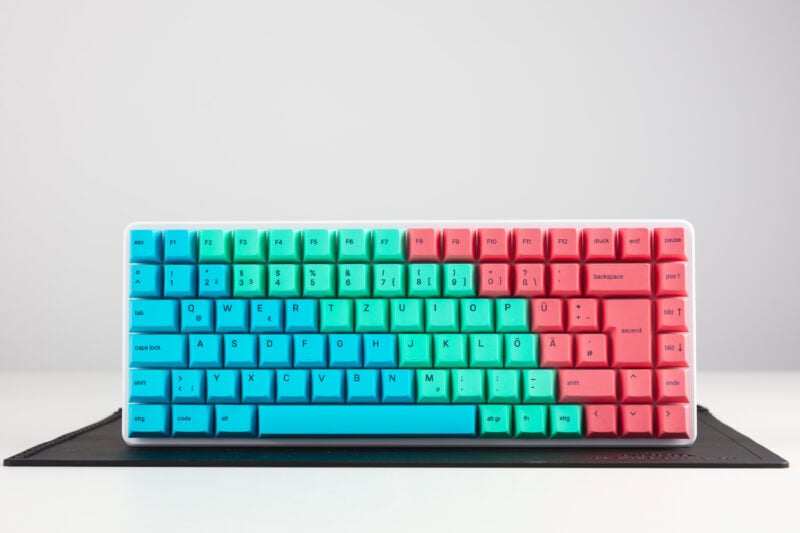
For those of you who prefer taller (or just different) keys, Raspberry Pi 500+ is compatible with most aftermarket keycap sets. We provide a key puller to simplify the process of removing the standard keys.
Solid state
Raspberry Pi 500+ shares the same basic internals as Raspberry Pi 500, but we’ve fitted the M.2 socket and supporting circuitry, and added a 256GB Raspberry Pi SSD with Raspberry Pi OS preinstalled. If you need more storage capacity, or want to install a different PCI Express peripheral, the internal bay can accommodate any 2280-format (80mm long) M.2 board. To provide access to the bay, the case is designed to be (carefully) opened, and we include a tool in the package to help you do this.
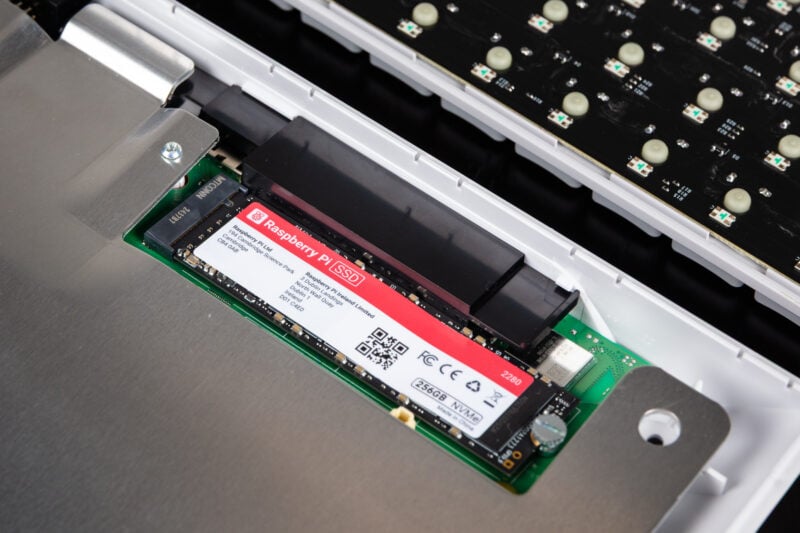
If you’ve installed something else in the bay, or want to quickly switch operating systems, Raspberry Pi 500+ still supports booting from SD card, or from external USB SSDs.
Happy memories
To support the heaviest workloads, Raspberry Pi 500+ comes with 16GB of LPDDR4X-4267 SDRAM. It’s the most memory we’ve ever fitted to a Raspberry Pi product, but we’re sure you’ll find a use for it. Indeed, uptake of the 16GB Raspberry Pi 5 has taken us by surprise since its launch in January, with people using them as build servers, to run computational fluid dynamics and large language models, or simply to keep truly enormous numbers of browser tabs open at one time.
Credits
Major product launches like Raspberry Pi 500+ are whole-team efforts: pretty much everyone here at Raspberry Pi has contributed to the project. Particular credit is due to John Cowan-Hughes, for the industrial design, and to Simon Martin and Chris Martin, for the electronic design and production engineering. Mechanical keyboards are a new technology for us, and Simon and Chris have the scars (and the air miles) to show for it.
So, there you have it: the ultimate Raspberry Pi all-in-one PC, and hopefully a fitting tribute and successor to the home computers that started it all. It’s already a fixture on most of our desks here at Pi Towers, and we’re sure it will look just perfect on yours too.
The post The ultimate all-in-one PC: Raspberry Pi 500+ on sale now at $200 appeared first on Raspberry Pi.
“}]]



This Post Has 0 Comments