
 [[{“value”:”
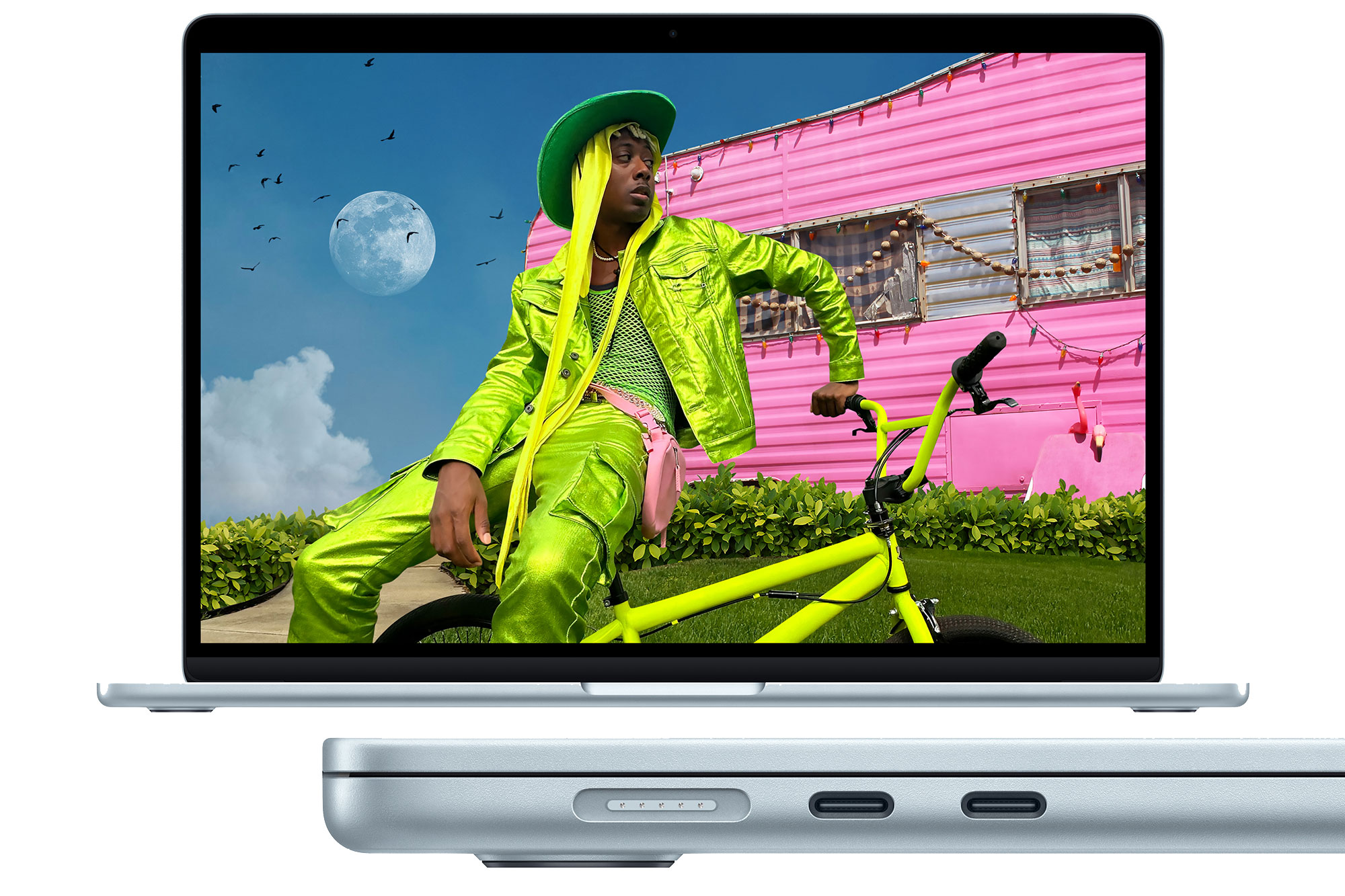
Apple’s new MacBook Air features a faster M5 CPU and next-generation GPU with a Neural Accelerator in each core. It now comes standard with double the starting storage at 512GB with faster SSD technology, and is configurable up to 4TB.
Also new: Apple’s N1 wireless chip delivers Wi-Fi 7 and Bluetooth 6 for seamless connectivity on the go—the same as on the company’s latest M5 Pro and M5 Max MacBook Pro models.
That increase in storage space to 512GB means that the M5 MacBook Air now starts at $1,099—ending the previous more magic sub-$999 price. This is likely so that Apple’s rumored low-cost MacBook Neo is markedly cheaper.
Apple MacBook Air M5 release date & availability
Available in 13- and 15-inch models in Sky Blue, Midnight, Starlight, and Silver, the new MacBook Air with M5 is available for pre-order from March 4, with availability beginning March 11.
The 13-inch MacBook Air with M5 starts at $1,099 (U.S.), and $999 (U.S.) for education, and the 15-inch MacBook Air with M5 starts at $1,299 (U.S.) and $1,199 (U.S.) for education.
This article is being updated as we learn more about the new M5 MacBook Air.
M5 MacBook Air: Storage, processor and performance
Apple
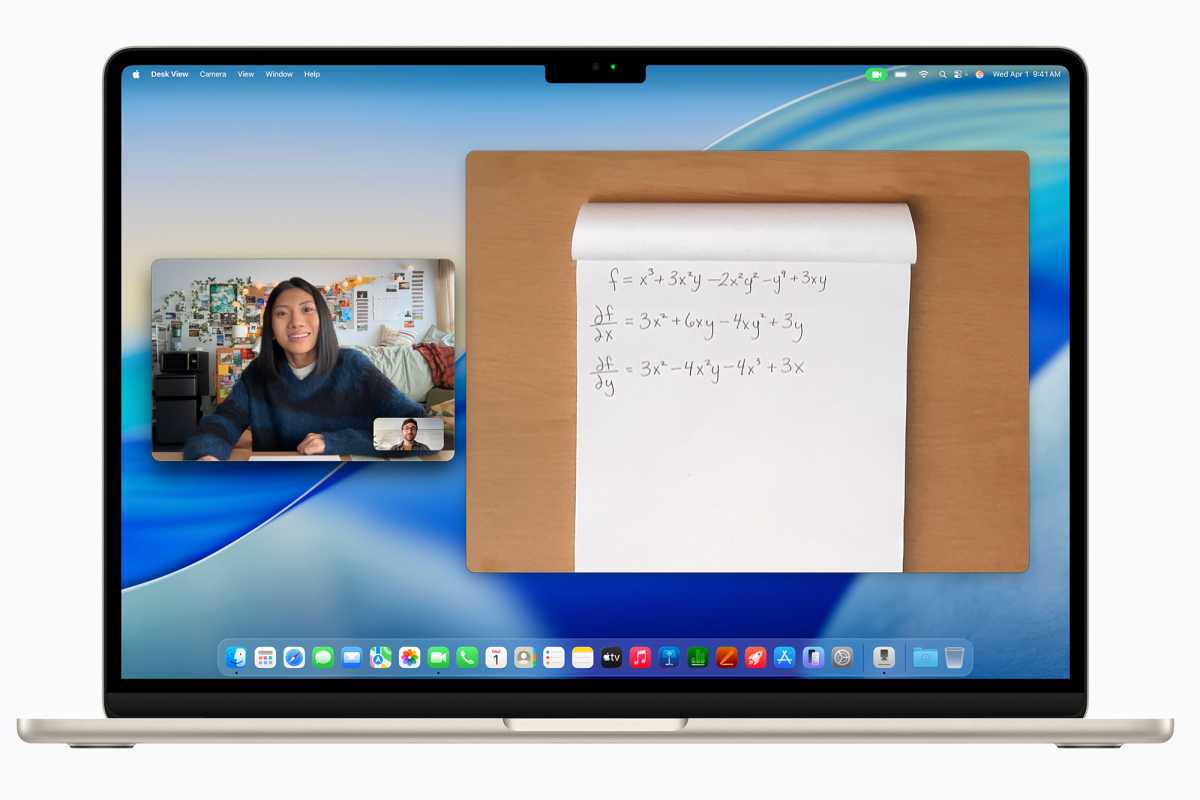
The M5 MacBook Air comes standard with 512GB of storage—double that of the previous M4 generation—and can be configured up to 4TB storage. Apple claims that the new SSD delivers 2x faster read/write performance compared to the previous generation.
The M5 boasts enhanced shader cores and a third-generation ray-tracing engine, improving tasks such as gaming and 3D rendering. M5 also features faster unified memory with 153GBps of bandwidth—a 28 percent improvement over M4—enabling smoother multitasking and faster app launches, says Apple.
- Up to 6.9x faster AI video enhancement performance in Topaz Video when compared to MacBook Air with M1, and up to 1.9x faster than MacBook Air with M4.
- Up to 6.5x faster 3D rendering with ray-tracing performance in Blender when compared to MacBook Air with M1, and up to 1.5x faster than MacBook Air with M4.
- Up to 2.7x faster image processing performance in Affinity when compared to MacBook Air with M1, and up to 1.5x faster than MacBook Air with M4.
- Web browsing is up to 50 percent faster when compared to a PC laptop with an Intel Core Ultra X7 processor, and more demanding tasks get up to 2x faster performance.
We already have a good picture of what to expect because the M5 chip arrived with the MacBook Pro and iPad Pro in late 2025 and our own review and benchmarking of the M5 MacBook Pro showed consistent gains in both single-core and multi-core processing. In our M5 MacBook Pro review we found that the M5’s single-core and multi-core results were 14 and 22 percent faster than the M4, respectively.
The M5’s 10-core GPU architecture includes a new Neural Accelerator in each core, which Apple claims provides over four times the peak GPU compute performance of the M4. In our real-world gaming tests using 3DMark Solar Bay Extreme the M5 maintained approximately 100 fps, a 50% improvement over the M4’s 70 fps.
Apple describes the M5 as offering a “big leap” in AI performance, with the M5 MacBook Air delivering up to 4x faster performance for AI tasks than MacBook Air with M4, and up to 9.5x faster than MacBook Air with M1. In practical creative workflows, these improvements translate to tangible time savings. For instance, exporting a complex audio project in GarageBand was roughly 10 seconds faster on the M5 compared to the M4 in our tests.
The M5 also offers a new 10-core GPU architecture with a Neural Accelerator in each core, which Apple says means it can provide “over 4x the peak GPU compute performance compared to M4”.
M5 MacBook Air: Specs, Storage, RAM
Foundry
- M5 with a 10-core CPU, 8-core GPU, 16‑core Neural Engine, 16GB unified memory, 512GB SSD, 2x Thunderbolt 4
- M5 with a 10-core CPU, 10-core GPU, 16‑core Neural Engine, 16GB unified memory, 512GB SSD, 2x Thunderbolt 4
We are delighted to see the base 256GB SSD move to a more comfortable 512GB base storage. Another welcome storage change is the 4TB SSD option that is now available. Storage options are 512GB, 1TB, 2TB and 4TB.
Apple claims that the new SSD delivers 2x faster read/write performance compared to the previous generation storage.
All models will start with the 16GB RAM configuration, as has been the case since Apple introduced it mid-way through the M3 cycle (October 2024). There continues to be the option to add either 24GB or 32GB off memory.
Only the base-level 13-inch M5 MacBook Air has the entry-level 10-core CPU, 8-core GPU option with 16GB of RAM and 512GB SSD. When you select any of Apple’s configuration options—say to move to 24GB RAM or 1TB SSD you are switched to the more powerful 10-core CPU, 10-core GPU option. All 15-inch MacBook Air models use the 10-core CPU, 10-core GPU option.
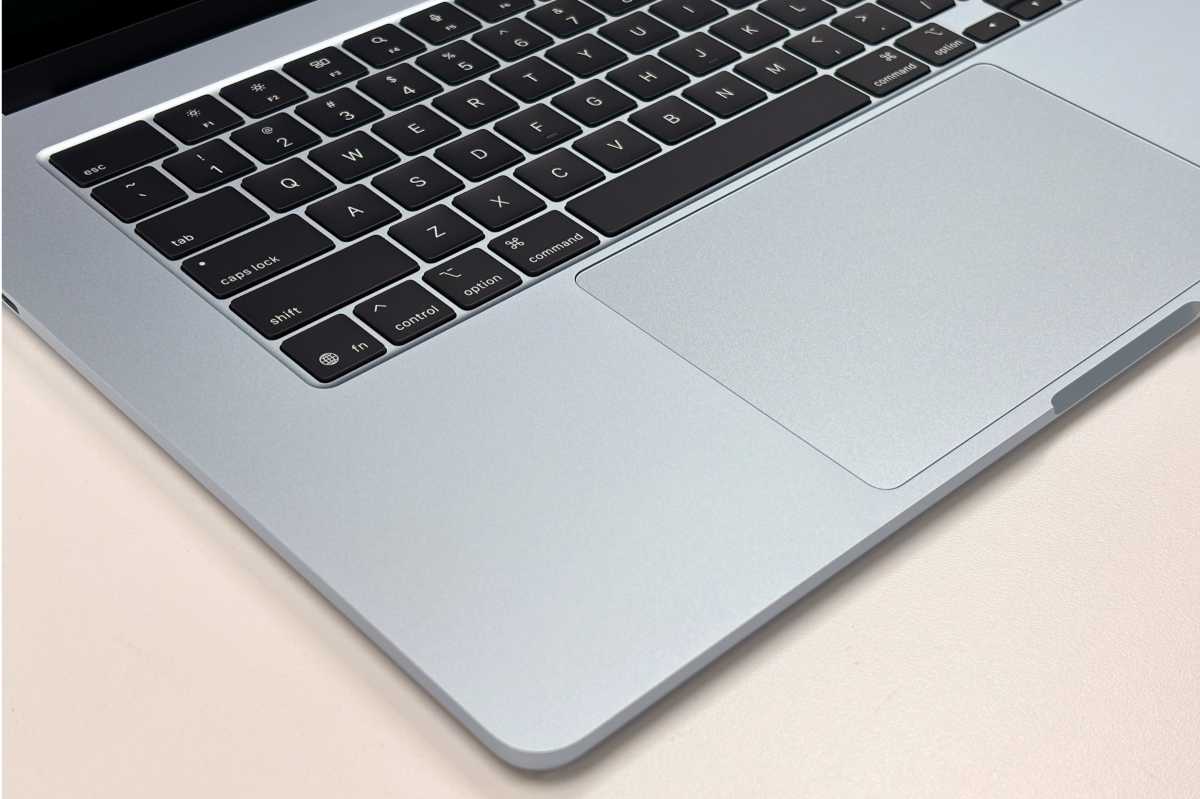
As with the M4 MacBook Air, Apple includes a built-in 12MP Center Stage camera, with the ports remaining at Thunderbolt 4. Thunderbolt 5 is aimed at more professional users, and is therefore limited to the MacBook Pro models plus desktop Macs.
M5 MacBook Air: Design

Apple introduced Sky Blue as a color option with the M4 MacBook Air.
Eugen Wegmann
The current design for the MacBook Air was introduced in 2022. Since it’s only a few years old, we didn’t expect it to change with the M5 release, and it hasn’t, retaining the same thin chassis that it is famous for.
With the M4 MacBook Air, Apple introduced a Sky Blue color to replace Space Gray, but the M5 Air sticks with the same colors for this generation: Sky Blue, Midnight, Starlight, and Silver.
M5 MacBook Air: Display
Foundry
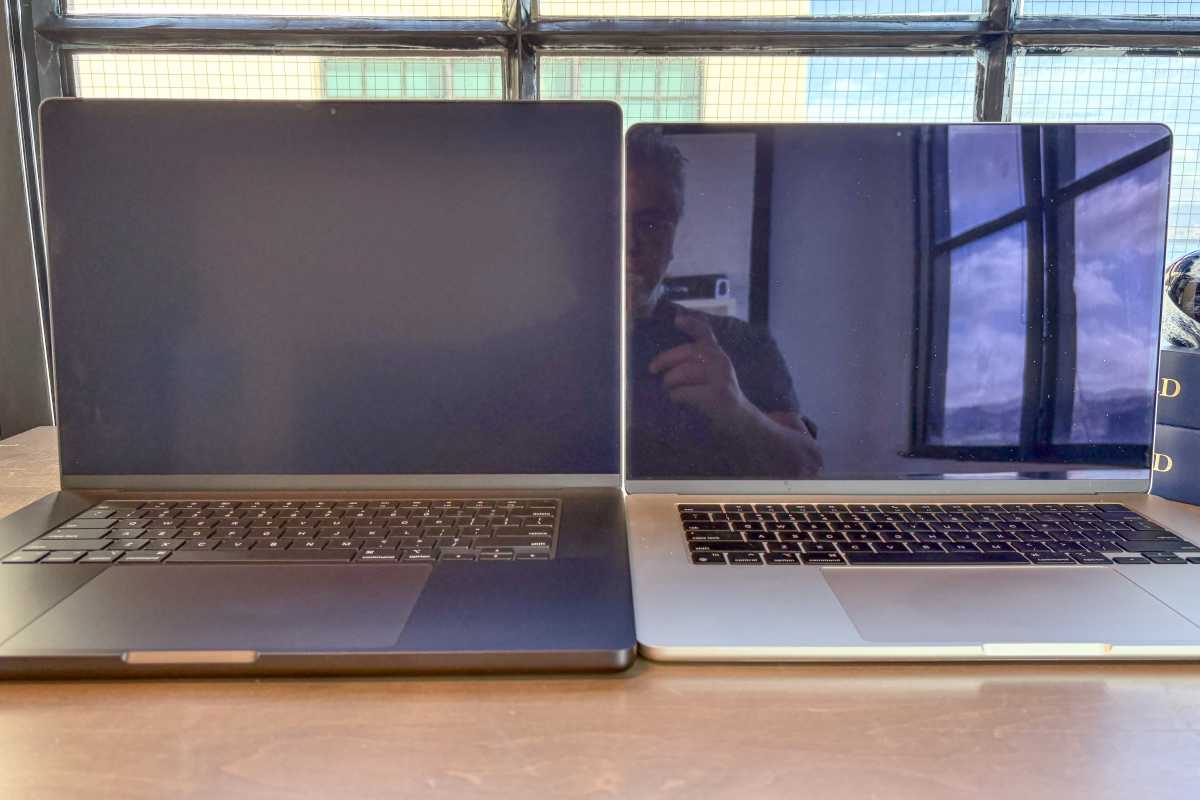
As before the M5 MacBook Air features a standard Liquid Retina display. ProMotion technology, as found on the MacBook Pro, is not expected to arrive until at least the M6 MacBook Air.
Unlike the M5 MacBook Pro, the M5 MacBook Air doesn’t boast a $150 Nano-texture display option to further reduce glare and reflections in bright lighting conditions.
The rumor mill has reported on plans for the company to implement OLED displays in its MacBooks, however this is unlikely to happen until 2027, with the MacBook Pro getting OLED first, perhaps before the end of 2026 in the rumored touchscreen MacBook Pro.
M5 MacBook Air: Battery life, power adapter and charging cable
Apple claims that the M5 MacBook Air offers up to 18 hours of battery life.
Apple
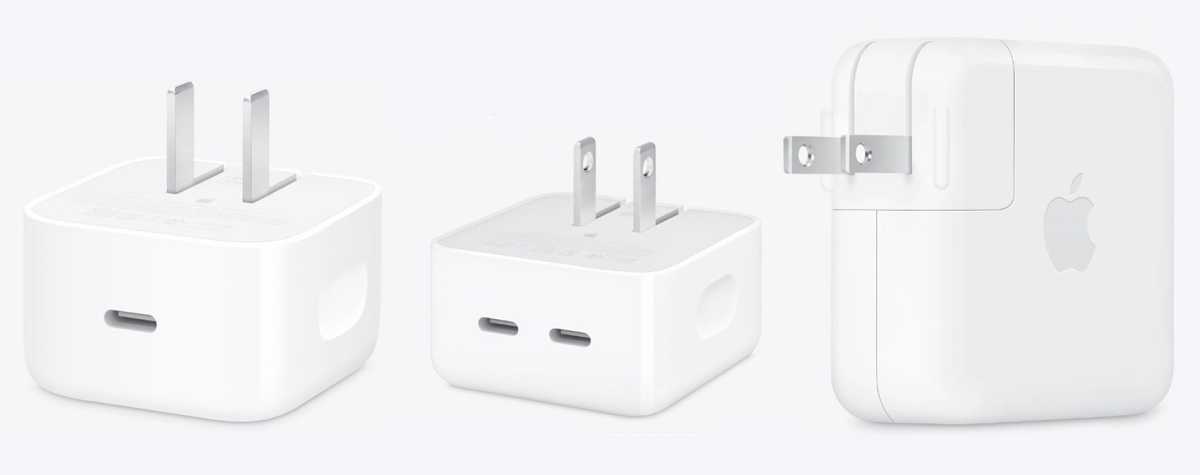
It ships with a 40W Dynamic Power Adapter with 60W Max. You can upgrade that a 35W Dual USB-C Port Adapter for an extra $20 or 70W USB-C Adapter also for $20.
The 40W adapter can boost to 60W but the 70W Power Adapter is required for full MacBook Air fast charging.
The M5 Air also ships with a 2-meter USB-C to MagSafe 3 Cable in all regions.
No power adapter is included in the U.K. in line with E.U. regulations that state consumers should have the ability to buy products without a charger. In that region, you can buy a 40W Dynamic Power Adapter with 60W Max for an extra £39, a 35W Dual USB-C Port for £59 or 70W USB-C Adapter for £59.
For more power adapter options check Macworld’s reviews of the best USB-C chargers for MacBook.
M5 MacBook Air: Release date
Pre-orders start on March 4, 2026, with models beginning to arrive with customers and in Apple Store locations and Apple Authorized Resellers, starting Wednesday, March 11.

Apple
M5 MacBook Air: Price
The 13-inch MacBook Air with M5 starts at $1,099 (U.S.), and $999 (U.S.) for education, and the 15-inch MacBook Air with M5 starts at $1,299 (U.S.) and $1,199 (U.S.) for education.
U.K. customers can simply change the $ sign for a £ to switch pricing for their region. See pricing below.
Here are the prices for the configurations of the M5 MacBook Air.
| MacBook Air model | U.S. | U.K. | Canada | Australia |
|---|---|---|---|---|
| 13in, 16GB RAM, 512GB SSD | $1,099 | £1,099 | $1,499 | $1,799 |
| 13in, 24GB RAM, 512GB SSD | $1,299 | £1,299 | $1,799 | $2,099 |
| 13in, 24GB RAM, 1TB SSD | $1,499 | £1,499 | $2,099 | $2,399 |
| 13in, 32GB RAM, 512GB SSD | $1,499 | £1,499 | $2,099 | $2,399 |
| 13in, 32GB RAM, 1TB SSD | $1,699 | £1,699 | $2,399 | $2,699 |
| 13in, 24GB RAM, 2TB SSD | $1,899 | £1,899 | $2,699 | $2,999 |
| 13in, 32GB RAM, 2TB SSD | $2,099 | £2,099 | $2,999 | $3,299 |
| 13in, 24GB RAM, 4TB SSD | $2,499 | £2,499 | $3,599 | $3,899 |
| 13in, 32GB RAM, 4TB SSD | $2,699 | £2,699 | $3,899 | $4,199 |
| 15in, 16GB RAM, 512GB SSD | $1,299 | £1,299 | $1,799 | $2,199 |
| 15in, 24GB RAM, 512GB SSD | $1,499 | £11,499 | $2,099 | $2,499 |
| 15in, 24GB RAM, 1TB SSD | $1,699 | £1,699 | $2,399 | $2,799 |
| 15in, 32GB RAM, 512GB SSD | $1,699 | £1,699 | $2,399 | $2,799 |
| 15in, 32GB RAM, 1TB SSD | $1,899 | £1,899 | $2,699 | $3,099 |
| 15in, 24GB RAM, 2TB SSD | $2,099 | £2,099 | $2,999 | $3,399 |
| 15in, 32GB RAM, 2TB SSD | $2,299 | £2,299 | $3,299 | $3,699 |
| 15in, 24GB RAM, 4TB SSD | $2,699 | £2,699 | $3,899 | $4,299 |
| 15in, 32GB RAM, 4TB SSD | $2,899 | £2,899 | $4,199 | $4,599 |
“}]]



This Post Has 0 Comments